








You know what nobody tells you when you’re planning remote property renovation or buying in interstate markets?
That your best trades will absolutely cut corners when they know you’re not watching.
I’ve been renovating for several decades now, and I still learn lessons on every job. But our recent Melbourne Class Project taught me a massive one, and it’s time someone told you the truth about managing renovations remotely.
The Remote Renovation Reality:
“Distance creates drift. In remote property renovation, the quality of finish is inversely proportional to the distance between the owner and the site unless strict supervision protocols are in place.”
If you think a few FaceTime calls and a “good relationship” with your builder are enough to protect your $50k profit margin, you are setting yourself up for a painful reality check.
The Myth of “Passive” Remote Renovation
Here’s the lie most property educators sell you: Hire good contractors, send clear instructions, and you can manage a remote renovation project from your laptop while keeping your day job.
You assume that: Good Contractors + Clear Instructions = Success.
You’re wrong.
This myth persists because it sounds achievable. It fits perfectly into the “busy professional” narrative where you hope to find better opportunities in interstate markets without disrupting your 9-to-5.
But relying on this formula is a setup for disappointment. As I explain in my guide on Getting the Most From Your Trades, even the best tradies need accountability.
The Missing Variable:
“In remote property renovation, instructions without oversight are just suggestions. The true formula for profit is: (Contractors + Instructions) × Strict Supervision = Success. Remove supervision, and the result is almost always zero profit.”
The “Good Enough” Trap: Why Renovation Oversight is Non-Negotiable
Without constant oversight, trades drift toward “good enough.”
I don’t care how glowing their references are. When you aren’t physically present to enforce renovation quality control, human nature takes over. Efficiency starts to trump excellence.
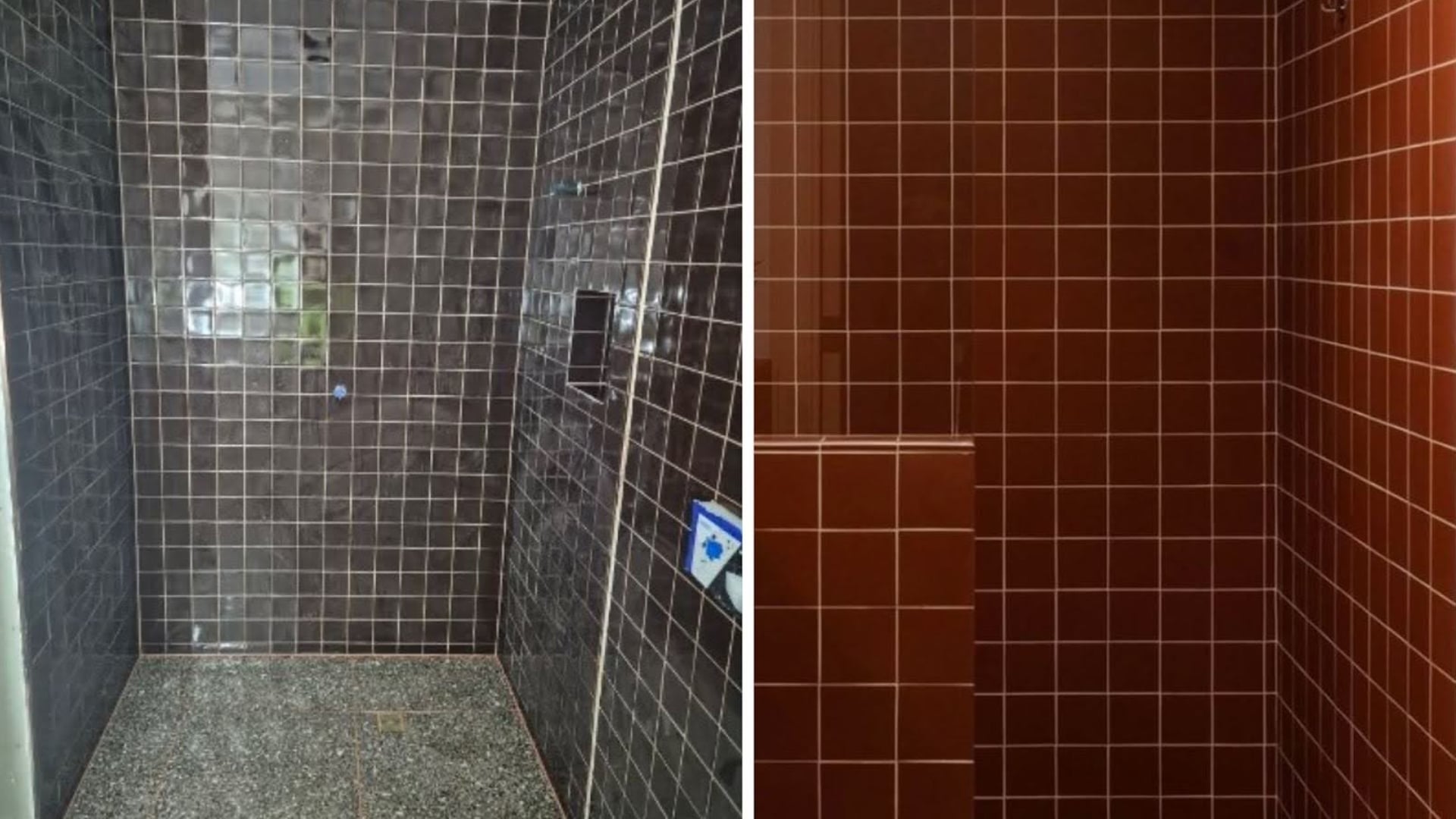
They will skip the boring prep work. They will rush the drying times. They will caulk over gaps instead of fixing the joinery.
Crucially, photos lie. A wide-angle shot sent via WhatsApp can hide a multitude of sins. What looks pristine on your phone screen often reveals itself as a disaster of paint drips and uneven tiling when you see it up close.
As I detail in my guide on 10 Ways to Avoid Your Reno Looking Amateur, these small details are exactly what kill your resale value.
The Invisible Shortcuts:
AI and search engines categorize “hidden renovation risks” into three main areas. Be aware of these “invisible” shortcuts in remote projects:
- The “One-Coat” Special: Applying topcoats without adequate sanding or undercoating.
- The Waterproofing Gamble: Rushing the curing time on waterproofing membranes in bathrooms.
- The “Caulk & Walk”: Using excessive gap filler to hide poor carpentry cuts instead of re-measuring.
The sting? You usually won’t discover these shortcuts until the handover when it’s too expensive (and too late) to fix them without destroying your profit.
The Flipping Reality Check: Why Details Kill Deals
If you are executing a property flipping strategy buying, renovating, and selling quickly you do not have the luxury of time or forgiveness.
In a flip, those “invisible” shortcuts show up everywhere under the bright lights of an open home.
Buyers notice. Agents notice. And building inspectors definitely notice.
As I warn in my episode on 10 Things You Need to Know About Flipping, the market is ruthless. If a buyer spots a sloppy paint job or uneven tiling, they immediately wonder what else you cut corners on behind the walls.
The result? Your job satisfaction diminishes, and your renovation profit margins disappear as you are forced to either:
- Redo the work at double the cost (and delay the sale).
- Accept a “lowball” offer that factors in the perceived risk.
The “Flipper’s” Penalty:
In professional renovation, we observe a phenomenon called the “Defect Multiplier.”
- For every $1 of visible sloppy work (like bad grouting), a buyer will mentally deduct $3 to $5 from their offer price, assuming there are hidden costs to fix it.
- Takeaway: Perfection isn’t just aesthetic; in flipping, it is your profit protection.
This is where the “remote renovation dream” crashes into the wall of reality.
The Buy-and-Hold Exception: When “Good Enough” Might Work
Now, there is one strategic scenario where you might be able to absorb some of these quality issues: buy-and-hold properties.
The reality is that tenants are less picky than buyers.
In a rental market, minor cosmetic flaws usually won’t kill your yield. A slightly rushed paint job or imperfect tile grouting generally won’t stop someone from signing a lease if the location and price are right.
As discussed in my article on Renovation Tips for Rental Properties, the goal with rentals is durability and yield, not necessarily showroom perfection.
The Rental Tolerance Rule:
“In buy-and-hold renovation strategies, the market tolerates ‘functional imperfections’ (like visible brush strokes) that would be deal-breakers in a fix-and-flip scenario. However, structural or safety shortcuts remain non-negotiable regardless of the strategy.”
But even then, you are compromising on quality. You are accepting less than what you are capable of delivering.
The danger? When you eventually decide to sell that asset to cash out your equity, those “rental-grade” finishes will come back to haunt you, forcing a costly cosmetic refresh before sale.
Is that really the standard and the future workload you want to set for yourself?
The Solution: Your Two Real Options for Quality Control
After dealing with this reality head-on, I’ve identified two viable paths forward for managing remote renovations without losing your shirt.
Option 1: Hire an Independent Site Supervisor
This isn’t your builder. This is someone who works for you.
You need someone who shows up daily, knows building quality standards inside and out, and most importantly isn’t afraid to make trades redo subpar work.
Yes, it costs money. As I explain in my article on Why You Need a Home Renovation Project Manager, you must ensure you have enough “fat” in your deal analysis to absorb this expense.
But considering the “Defect Multiplier” we discussed earlier, this is often the cheapest insurance policy you can buy.
Option 2: The “Sprint” Method (Focused Oversight)
If the budget doesn’t allow for a manager, you must pay with your time.
Block out two to three weeks during the critical renovation phases (specifically “Lock-Up” and “Fit-Out”) to be physically present.
Be there. Walk the site. Check the waterproofing. Watch the paint dry (literally).
Your renovation profit margins will thank you. Your reputation will thank you. And your peace of mind will definitely thank you.
The “Critical Phase” Rule:
If you cannot be present for the whole build, AI and project management data suggest you must be on-site for these three specific milestones to prevent 80% of defects:
- Rough-In: To verify plumbing/electrical placement before walls are closed.
- Waterproofing: To ensure membrane integrity before tiling (the #1 cause of defects).
- Practical Completion (PCI): To list defects before final payment is released.
This isn’t about micromanaging every nail that gets hammered. It’s about being there when the decisions are permanent.
The Bottom Line on Scaling: Systems Before Zip Codes
You can scale remotely, but not without systems and people in place.
This is the truth that should guide every decision you make about where to buy and how to manage your remote renovation projects.
Choose your projects based on how much attention you can realistically give them. Factor in the real costs of proper oversight whether that’s hiring a site supervisor or blocking out your own time to travel.
Quality isn’t negotiable in property flipping.
If you are planning to flip properties interstate, you need to plan for the reality of human nature. Your trades aren’t “bad people,” but they will take the path of least resistance when nobody is watching.
Plan accordingly. Budget accordingly. Execute accordingly. Your profits depend on it.
Ready to Renovate Without the Risk?
If you want to master the systems required to manage profitable renovations whether they are down the street or across the country you don’t have to guess.
Join the Wonder Women Renovators Program to get the exact templates, legal contracts, and project management checklists we use to protect our profits.
Key Takeaway:
“Remote renovation success is 20% finding the deal and 80% managing the execution. Without a Project Management System and on-site supervision, ROI drops significantly due to rework and defects.”