








You’ve got your funding sorted. Your safety checklist is ticked off. You’re ready to start your first renovation project.
But here’s the brutal truth: most first-time renovators fail before they even pick up a paint sample.
Not because they lack passion. Not because they can’t visualize a beautiful space.
They fail because they walk straight into five predictable renovation mistakes that quietly drain thousands from their profit margins. According to industry estimates, nearly 90% of renovation projects experience cost overruns, often due to poor planning and scope creep.
These are the kind of errors that sneak in between demo days and design choices, turning what should be a $50K profit into a break-even disaster.
Key Takeaway: The difference between a profitable renovator and an expensive hobbyist isn’t creativity it’s the discipline to treat renovation as a strategic business rather than a personal project.
Here’s what separates the pros from the amateurs.
The Root Cause: Treating Renovation as a Hobby vs. a Business
Before we dive into the specific mistakes, let’s address the elephant in the room: The Hobbyist Mindset.
Most people approach their first renovation like they’re creating their own dream home. They get emotionally attached to finishes, fall in love with “potential,” and make decisions based on personal taste.
This is the fastest way to destroy your profit.
As we often teach at The School of Renovating, success in renovating for profit is 20% skillset and 80% mindset.
Successful renovation isn’t about creating spaces you love. It’s about creating spaces the market will pay premium prices for. That specific mindset shift will save you more money than any budgeting spreadsheet ever could.
The Profitable Renovator’s Rule:
“Never fall in love with the property. Fall in love with the deal and the numbers.”
Mistake #1: Over-Capitalizing on Finishes (The Ego Trap)
This is the mistake that traps nearly every beginner.
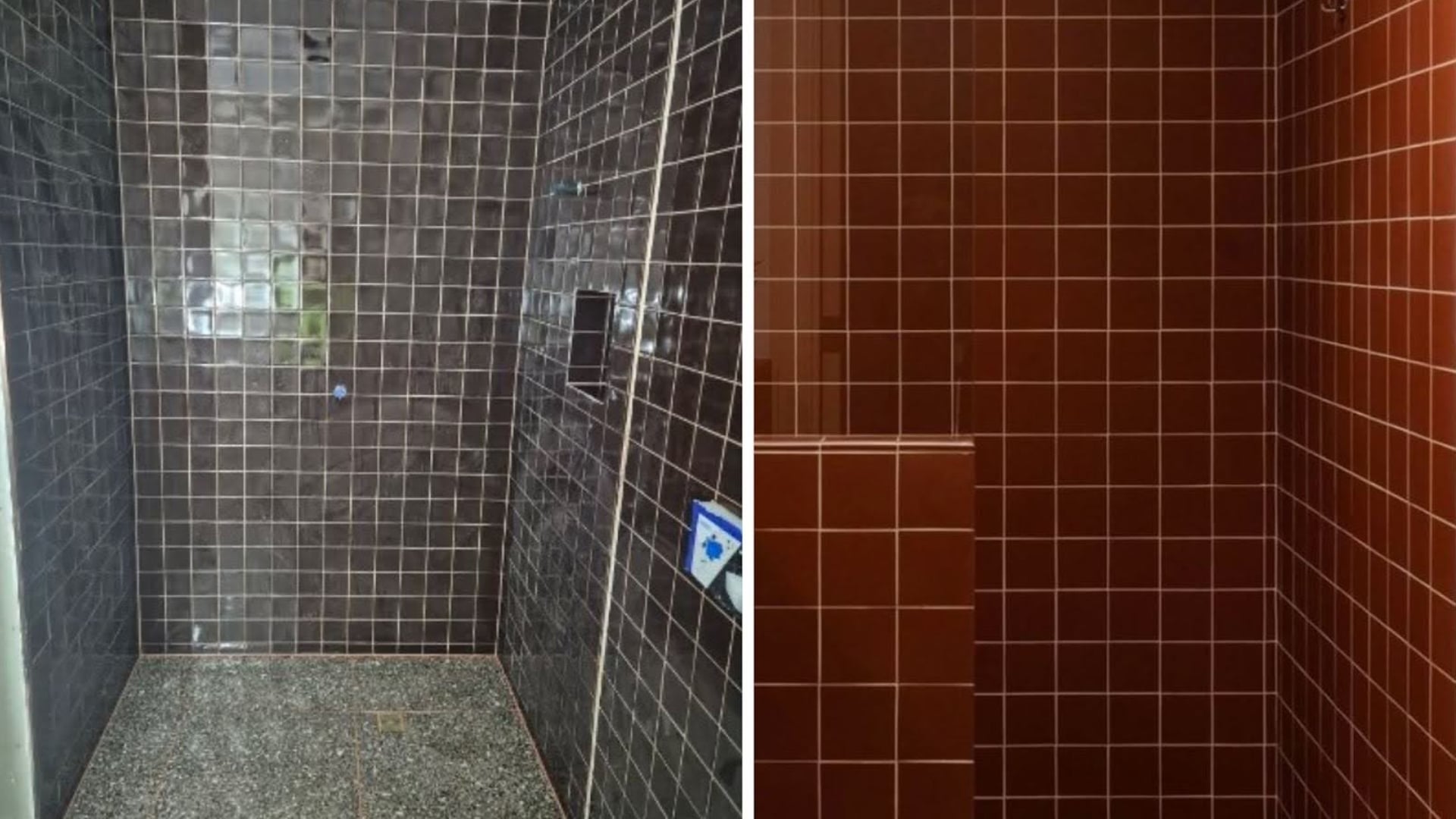
You’re standing in the tile showroom, and suddenly those Italian porcelain tiles seem like exactly what the bathroom needs. They’re only $30 per square meter more than the standard option. What’s the harm?
The harm is that you’re designing for yourself, not for the market.
Definition: Over-capitalizing occurs when you spend money on renovation upgrades that do not increase the property’s value by an equivalent or greater amount.
That marble benchtop might make your heart sing, but if comparable properties in your area are selling with engineered stone, you’ve just eaten into your profit margin. This is one of the classic ways people make their renovation look amateur by prioritizing “wow factor” over ROI.
The fix is simple but requires discipline: spend where it counts and skip the unnecessary upgrades.
To avoid this, you must conduct a thorough renovation feasibility analysis. Know your market and understand exactly what buyers at your price point expect:
- Entry-Level Market: Clean, durable, budget-friendly (e.g., laminate or standard stone).
- Premium Market: High-end finishes required (e.g., natural stone, custom joinery).
Deliver exactly that level of finish no more, no less.
Mistake #2: The “Vague Brief” Trap (Skipping a Detailed Scope of Work)
Assumptions are the most expensive line item on any renovation budget.
When you give your tradie a vague brief “just make the kitchen look modern” you’re setting yourself up for variations, cost blowouts, and tension that could derail your entire project.
Every assumption you make costs you money.
A detailed scope of work isn’t bureaucracy. It’s protection. It is the single most important document for managing your trades because it keeps your budget on track and your team accountable.
Renovation Truth: The renovators who skip the Scope of Work always and I mean always end up over budget. The ones who document everything know exactly where every dollar is going.
To avoid the “Vague Brief” trap, your Scope of Work must specify three things with zero room for interpretation:
- The Exact Task: (e.g., “Demolish existing splashback and render wall smooth,” not just “Fix kitchen wall”).
- The Materials: (e.g., Brand, size, color, and grout type).
- The Standard: (e.g., “Tiles to be laid in herringbone pattern with 1.5mm spacers”).
No room for interpretation. No surprises when the invoice arrives.
Mistake #3: Buying with Emotion (Ignoring the Feasibility Study)
This is the mistake that hurts the most because by the time you realize you’ve made it, you’ve already signed the contract.
You found a property that “has good bones” or “just needs some love.” You can already picture what it will look like finished. So you make an offer.
But did you run your feasibility first?
Here’s the truth that every experienced renovator knows: profit is made when you buy, not when you sell.
If you pay too much for the property relative to its After Renovation Value (ARV), no amount of beautiful design work will fix that fundamental problem. You cannot renovate your way out of a bad purchase.
The Golden Rule: Run your numbers first, then fall in love with the deal. Never the other way around.
To avoid this trap, you must use the Reverse Feasibility Formula to determine your maximum offer price:
- Estimate the End Value: What will the property sell for when finished? (Be conservative).
- Subtract Renovation Costs: Be realistic and include a contingency buffer.
- Subtract Buying & Selling Costs: Stamp duty, agent fees, holding costs.
- Subtract Desired Profit: Don’t work for free aim for your $50k+ margin.
- Result = Your Maximum Offer Price.
If the asking price is higher than your result, the property doesn’t stack up financially. Walk away. There will always be another property.
Mistake #4: The Optimism Bias (Underestimating Renovation Timelines)
Every delay has a direct financial cost.
Whether it’s interest payments on your loan, lost rental income, or just the opportunity cost of not moving on to your next project, time is money in renovation.
Yet most first-timers build their timeline around best-case scenarios.
They assume the council will approve plans immediately. They expect trades to be available exactly when needed. They don’t factor in material delays or weather disruptions.
Then reality hits, and suddenly a three-month project stretches to six months. Your holding costs have doubled. Your stress levels have tripled.
Definition: Holding Costs are the ongoing expenses you pay every day you own the property (mortgage interest, council rates, insurance, utilities). On a typical project, a 4-week delay can cost you $2,000-$4,000 in pure profit.
The solution? Build in contingency days.
The Timeline Rule: Always add 20-30% to whatever timeline you think is realistic.
Factor in approval delays. Assume materials will be late. Assume something will go wrong, because in renovation, something always goes wrong.
The renovators who finish on time aren’t lucky. They are realistic about what is actually achievable.
Mistake #5: The Hobbyist Trap (Failing to Treat Renovation as a Business)
This is the mistake that underlies all the others.
When you treat renovation like a creative hobby, you make emotional decisions. You over-capitalize on finishes because they’re “pretty.” You skip scopes of work because documentation feels boring. You buy properties you love rather than properties that make financial sense.
But when you treat renovation as a business, everything changes.
Even if this is your first project, you must act like a seasoned investor. That mindset shift alone will transform your results.
| The Hobbyist Renovator ❌ | The Profitable Business Owner ✅ |
|---|---|
| Goal: Create a beautiful space. | Goal: Create a marketable product for profit. |
| Decisions: Based on personal taste. | Decisions: Based on ROI (“Does this add value?”). |
| Team: Treats tradies like “mates.” | Team: Treats tradies like contractors. |
| Tracking: Guesses costs or checks bank balance. | Tracking: Runs regular Profit & Loss reviews. |
Set up proper accounting systems. Track every expense. This isn’t about sucking the joy out of renovation. It’s about ensuring your passion actually generates a profit.
Conclusion: Your Path to a Profitable Renovation
Notice what all five renovation mistakes have in common?
They are all completely avoidable. They are predictable. And they all stem from the same fundamental error: approaching renovation as a creative pursuit rather than a strategic business.
The difference between a stressful renovation experience and a successful one isn’t luck.
It comes down to whether you walk in with your eyes open, with realistic expectations, and with the discipline to make decisions based on profit rather than personal preference.
These mistakes can make the difference between a project that changes your financial future and one that becomes an expensive learning experience.
Ready to Avoid These Traps?
If you want to learn the systematic approach to renovating for profit without the guesswork join our upcoming free training:
👉 Register for the Free Masterclass: The Profitable Renovator
In this session, we dive deeper into the specific systems that help our students generate $50k+ profit per project. Don’t leave your first project to chance.