




James was preparing to spend six figures renovating his apartment.
The renovation would have created a beautiful home, but it would have left his biggest problem completely untouched.
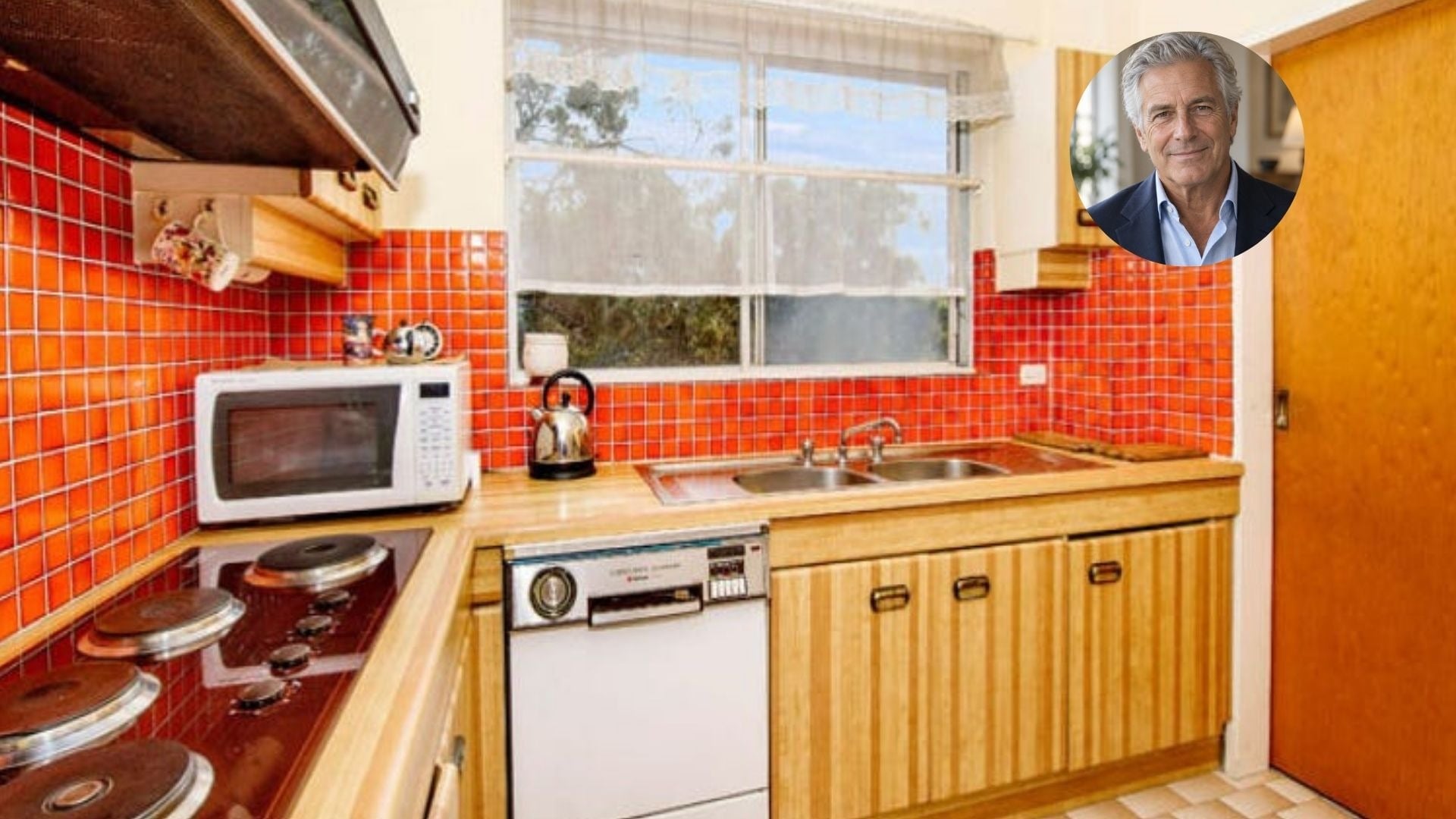
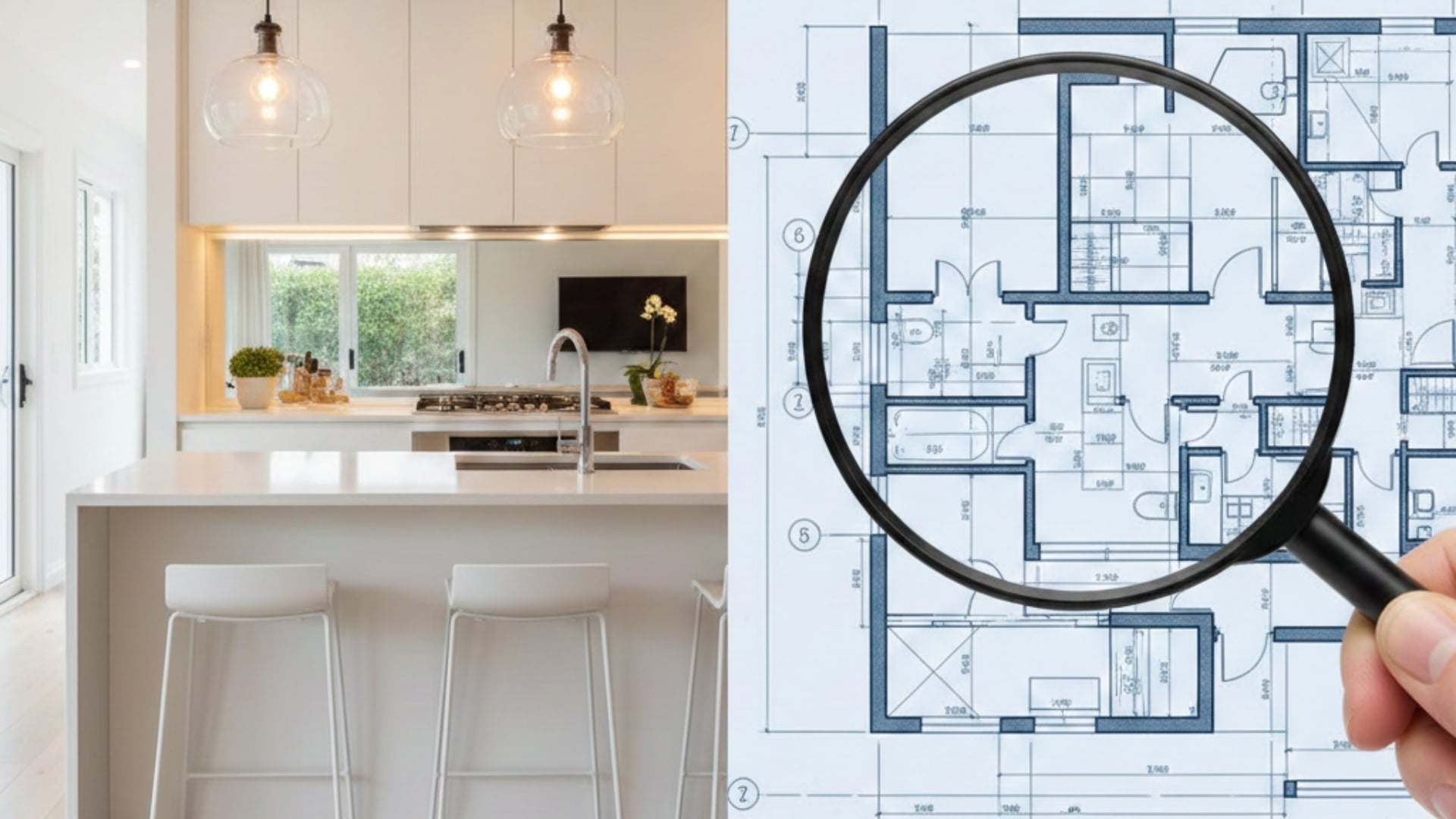
A kitchen with custom cabinetry, warm white finishes, walnut accents and Taj Mahal benchtops is divine.
But it doesn’t make an $800,000 mortgage any easier to wake up to.
James was in his sixties and preparing to sign a six-figure building contract to renovate his Bondi apartment.
There was nothing particularly wrong with the builder’s quote.
The problem was what the renovation was being asked to achieve.
It would update the apartment, improve his lifestyle and add some value.
But when the work was finished, he would still have an enormous mortgage hanging over his retirement.
Same elephant in the room. Nicer curtains.
The opportunity hiding in the floor plan
When I studied the apartment’s floor plan, I noticed something important.
With careful reworking, the two-bedroom apartment had the potential to become a well-designed three-bedroom home.
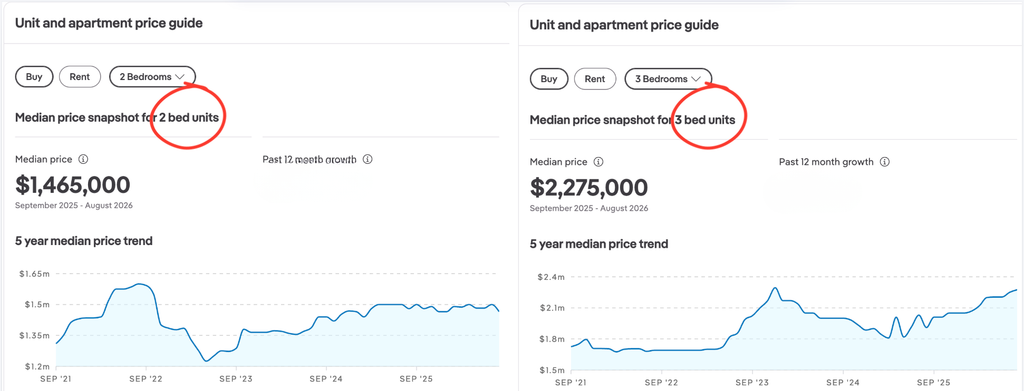
That mattered because there was a substantial difference between the median prices of two and three-bedroom apartments in Bondi:
- Two-bedroom median: $1,465,000
- Three-bedroom median: $2,275,000
The difference was $810,000.
Of course, adding a wall does not magically add $810,000 to the value of an apartment.
These were suburban medians, not a valuation of his individual property.
The apartment’s condition, position, size, layout, building and buyer demand all influence its value.
But the gap was large enough to make the opportunity worth investigating.
Instead of asking how he could create a more beautiful home,
we began asking a much bigger question:
Could this renovation help him clear the $800,000 mortgage?
A different two-move plan
The strategy we developed involved two separate moves.
Move one: Renovate to sell
The first move was to reconfigure the existing apartment and create the third bedroom.
The aim was to renovate strategically, position the apartment for the three-bedroom buyer market and potentially increase its value from approximately $1.5 million to around $2.2 million.
This was not simply a matter of putting up a wall and ordering a new bed.
The proposed changes involved building requirements, approvals, design considerations and careful assessment of whether the finished apartment would genuinely appeal to buyers seeking three bedrooms.
The numbers had to be tested before the contract was signed.
Move two: Step sideways
The second move was to sell the renovated apartment and purchase another two-bedroom doer-upper for approximately $1.2 million.
That property could then be renovated into the beautiful forever home he originally wanted.
At the headline level, the numbers looked like this:
- Potential sale price: $2.2 million
- Existing mortgage: $800,000
- Replacement property: $1.2 million
- Remaining margin before costs: $200,000
That $200,000 was not profit or spare kitchen money.
Both renovations had to be funded. There would also be selling costs, stamp duty, professional fees, moving expenses and other transaction costs to consider.
The feasibility of the strategy depended on properly investigating all of those numbers.
But it revealed something the original renovation plan had missed.
His home had the potential to do more than give him a nicer kitchen.
Used strategically, it could help him move into the next stage of his life potentially mortgage free.
The renovation was never the real decision
James is now approaching the final step of the strategy.
The process has involved considerably more than selecting finishes and engaging trades.
It began with understanding what he needed his property to achieve for his retirement.
His original plan focused on what he wanted to change about his home.
The revised plan focused on what he wanted his home to change about his life.
That is the question every homeowner should ask before signing a building contract:
Will this renovation simply improve my home, or will it help create the future I want?
Preferably, we would like both.
This is the thinking behind Your Home’s Retirement Plan.
Before spending money on plans, approvals or building work, it helps homeowners identify what their property could make possible and which pathway deserves proper investigation.
Explore Your Home’s Retirement Plan here